
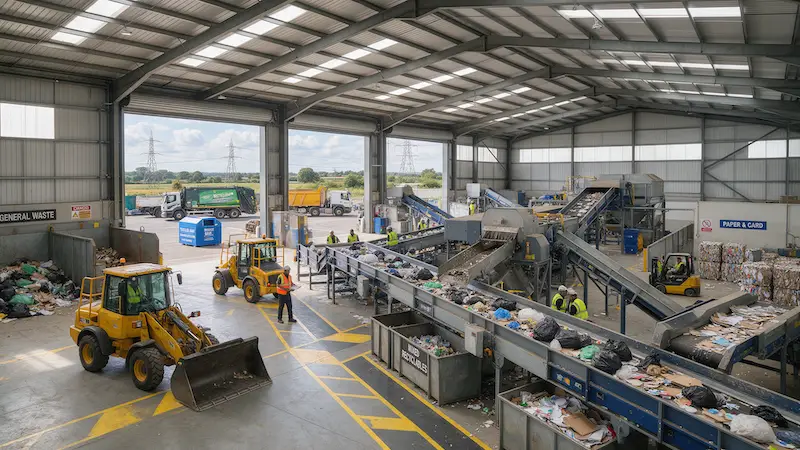
Once your skip has been collected and driven away, it’s easy to assume the rubbish inside will be recycled. But where does all that waste actually go, and how much of it gets a second life?
The reality is that waste removal involves much more than simply collecting rubbish. Behind the scenes, waste can pass through sorting facilities, recycling processes and recovery operations before reaching its final destination. Not everything can be recycled, and some materials require completely different treatment.
With the UK producing millions of tonnes of household waste every year, understanding what happens after collection has never been more relevant.
How Much of Our Rubbish Is Actually Recycled?
The UK produces millions of tonnes of household waste every year, but how much of it actually gets recycled? Government figures reveal just how much rubbish we’re generating and why responsible waste removal remains so important.
UK Household Waste in 2024
Tonnes of household waste generated
Household recycling rate
Source: Defra, UK Statistics on Waste, September 2026. Figures relate to household waste, not specifically skip collections.
These figures highlight an important distinction: just because rubbish is collected doesn’t mean it will automatically be recycled. The materials involved, their condition and the facilities processing them all influence what happens next.
Although these statistics relate to household waste rather than skip collections specifically, they demonstrate the importance of responsible waste management and the challenges involved in recovering recyclable materials.
What Happens to Your Skip After Collection?
When a skip is collected, the waste doesn’t necessarily go straight to landfill. Depending on the waste management provider and the materials involved, it may be taken to a licensed waste transfer station or an appropriate processing facility.
Here’s how the process typically works.
1. Waste Arrives at a Transfer Station
After collection, the skip is transported to a facility where its contents can be inspected and unloaded. Waste operators assess the materials received and identify items that require specialist handling.
This is particularly important when dealing with mixed construction waste, bulky household rubbish or materials unsuitable for general disposal. Identifying these materials early helps ensure they are directed towards appropriate treatment or disposal processes.
2. Recyclable Materials Are Separated
Suitable waste can then be sorted into different material streams using machinery, manual sorting or a combination of both.
Metals, timber, cardboard and certain plastics may be separated for further processing, while materials that cannot be recycled are directed towards other treatment or disposal routes. The sorting methods used will depend on the facilities available and the type of waste collected.
3. Materials Are Sent for Processing
Once separated, recyclable materials can be transported to specialist facilities where they are prepared for reuse in manufacturing or other applications.
Metal can be melted down and used to manufacture new products, suitable timber can be processed into recycled wood products, and certain construction materials can be crushed for use as recycled aggregates. These processes help keep valuable resources in circulation rather than relying entirely on new raw materials.
4. Remaining Waste Is Recovered or Disposed Of
Not everything collected can be recycled. Some non-recyclable waste may be suitable for energy recovery, while other materials require specialist treatment or landfill disposal.
The final destination depends on the waste type, contamination levels and available treatment facilities. This is why responsible waste removal involves assessing materials individually rather than assuming everything can follow the same recycling process.
What Happens to Different Types of Waste?
One of the biggest misconceptions about waste removal is that all materials follow the same disposal process. In reality, different materials require different treatment methods, and some are considerably easier to recycle than others.
Waste material | What can happen after collection |
|---|---|
Wood and timber | Suitable timber may be processed into recycled wood products or recovered for energy. |
Metal | Separated and processed for use in manufacturing new metal products. |
Bricks and concrete | Crushed and screened for potential use as recycled aggregates. |
Cardboard | Sorted and processed into recycled paper and packaging products. |
Plastics | Suitable types may be separated and recycled, depending on contamination and processing capabilities. |
Mixed general waste | Sorted where possible, with remaining materials sent for recovery or disposal. |
These are potential treatment routes rather than guarantees. The condition of the materials, contamination levels, and facilities used determine what can actually be recovered.
Recycling and Waste Recovery Aren’t the Same Thing
You may have seen waste removal companies advertising high recycling or landfill diversion rates. However, these figures don’t necessarily mean the same thing, and understanding the difference can help you make more informed decisions about waste disposal.
Recycling involves processing waste materials into new materials or products. For example, metal recovered from a skip might eventually be used to manufacture new steel products, while suitable concrete can be crushed and reused in construction.
Waste recovery is a broader category that includes recycling but also covers other processes, such as generating energy from suitable non-recyclable waste. Although energy recovery can reduce reliance on landfill, it doesn’t preserve materials in the same way as recycling.
A company reporting that 95% of its waste is diverted from landfill is not necessarily claiming that 95% has been recycled. Understanding this distinction is important when comparing waste management providers and their environmental claims.
How Is Waste Removal Changing in 2026?
The UK waste industry is undergoing significant changes, particularly around how waste is recorded and tracked. Greater transparency is becoming increasingly important as the government works to improve accountability and tackle illegal waste disposal.
From 1 October 2026, permitted and licensed waste-receiving sites in England and Wales will be legally required to report relevant waste receipts through the government’s digital waste tracking service.
The system is intended to improve transparency around waste movements, support regulatory oversight and help tackle illegal waste disposal. It should also help authorities build a clearer picture of how waste moves through the industry and where materials are ultimately handled.
For customers arranging skip hire, this is an important development. Greater visibility over waste movements should make it easier for regulators to identify suspicious activity and poor waste management practices.
However, digital tracking doesn’t automatically guarantee that waste will be recycled. Choosing a responsible provider and ensuring waste is handled correctly remain essential.
How Can You Help More Waste Get Recycled?
Responsible waste removal starts before your skip is collected. The way you prepare and dispose of unwanted materials can influence how easily they can be processed afterwards.
A few practical steps can make a difference:
Keep reusable items aside. Furniture, fittings and materials in good condition may be suitable for donation, resale or reuse rather than disposal.
Avoid contaminating waste. Liquids, chemicals and other prohibited materials can create problems during sorting and treatment.
Check what your skip can accept. Certain items, including asbestos and some electrical equipment, require specialist waste services.
Separate materials when practical. Keeping recyclable materials apart can make recovery easier, particularly during larger building projects.
Choose the right skip size. Planning the amount of rubbish you expect to generate can help avoid unnecessary additional collections.
For larger home renovations, garden clearances and construction projects, arranging professional skip hire provides a convenient way to manage permitted waste while keeping the working area organised.
Choose Responsible Waste Removal With SkipHire UK
What happens to your rubbish after collection matters just as much as how you dispose of it in the first place. Although not every material can be recycled, choosing a responsible waste removal service helps ensure unwanted materials are collected and directed towards appropriate waste management facilities.
At SkipHire UK, we make arranging skip hire straightforward, with a range of skip sizes available for household clearances, renovations, construction projects and general waste removal.
Need to clear unwanted rubbish? Book your skip online with SkipHire UK or call us today to discuss your waste removal requirements.